
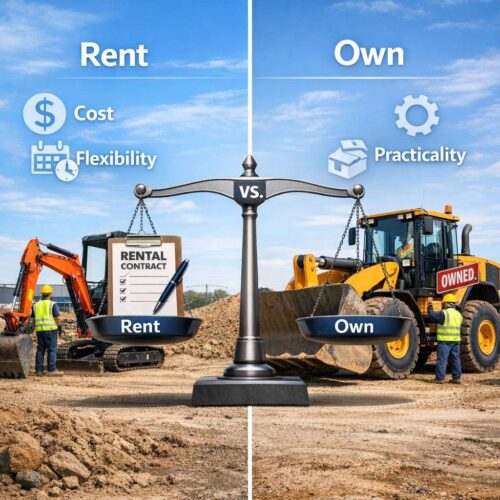
Discover how efficient operations rely on reliable plant machinery. From excavators to loaders, our equipment fleet supports construction, mining, and industrial projects with safety, power, and precision. Renting or purchasing, you’ll benefit from modern, well-maintained assets and responsive service. For standards and equipment definitions, refer to essential guidelines here: https://www.ifrs.org/content/dam/ifrs/publications/pdf-standards/english/2022/issued/part-a/ias-16-property-plant-and-equipment.pdf?bypass=on.
IntroductionRenting plant machinery can offer a practical alternative to outright purchase, especially for projects with uncertain duration or variable workloads. This article weighs the cost implications, flexibility benefits, and practical considerations of renting versus buying. By examining total cost of ownership, availability, maintenance responsibilities, and risk management, readers in the UK can make informed decisions about plant machinery for sale uk options, plant machinery sales, and used plant sales uk opportunities.
Costs and Total Cost of Ownership
- Upfront vs. ongoing costs: Purchasing plant equipment typically requires a substantial upfront capital outlay, plus ongoing expenses such as maintenance, insurance, storage, and depreciation. Renting spreads these costs over the project duration, converting large capital expenditure into predictable, periodic payments.
- Depreciation and tax: Buying may offer tax relief through depreciation, but perception of tied-up capital remains a consideration. For many organisations, the cash flow advantage of renting is appealing, particularly when projects are short-term or have uncertain funding.
- Cost per hour: For rental, operators often consider cost per hour, including delivery, fuel, and servicing. In contrast, owned plant machinery incurs fixed costs regardless of utilisation, meaning idle periods still incur wear and financial burden.
- resale value: With second hand plant machinery, there is potential to recoup some cost through resale. However, market demand, utilisation history, and component life affect resale value, and planning for resale adds complexity.
Flexibility and Project Requirements
- Project duration and peak demand: Renting excels when project length is uncertain or when demand for equipment fluctuates. Short-term hires or swapping between machine types during a project can optimise productivity without long-term commitments.
- Access to specialist equipment: If a project requires niche or high-spec machinery (for example, certain heavy plant machinery models or attachments), rental can provide access to the latest technology without a protracted purchase cycle.
- Storage and logistics: Owning plant equipment requires secure storage and maintenance facilities. Renting can alleviate storage burdens, particularly for businesses with sporadic usage or limited site access.
- Equipment diversity: Renting enables a mix-and-match approach—utilising different machines as tasks evolve without owning a broad fleet. This is advantageous for construction sites with changing needs.
Maintenance, Warranty, and Risk Management
- Maintenance obligations: With rental, the provider typically handles maintenance, servicing, and interim repairs, reducing in-house workload and risk. For buyers, maintenance responsibility rests with the owner, which can be resource-intensive but offers full control over service standards.
- Availability guarantees: Reputable rental firms often guarantee equipment availability and provide replacement machines if a unit breaks down. This can minimise downtime on critical jobs.
- Wear and tear considerations: Used plant sales uk and second hand plant machinery can present good value, but buyers should scrutinise service history, hours, and potential repairs. A thorough inspection or third-party mechanical survey is advisable.
- Warranty and aftersales: New plant machinery for sale uk may come with manufacturer warranties, while used plant sales may have limited or used warranties. Understand the scope of cover to avoid unexpected costs.
Quality, Safety, and Compliance
- Modernity and emissions: Renting can provide access to newer, more efficient machines that meet current emissions standards and safety features. This is particularly relevant for sites with stringent environmental or urban compliance requirements.
- Compatibility and attachments: Consider whether rented equipment supports the required attachments or tweaks for specific tasks. Compatibility can affect productivity and outcomes.
- Operator training: Regardless of ownership, operator competence matters. Some rental providers offer operator training or support, which can improve efficiency and safety on site.
Market Considerations: UK-Specific Dynamics
- Availability of plant machinery for sale uk vs. rental fleets: The UK market features a mix of new, used, and rental equipment. Depending on regional demand and supplier networks, rental may offer faster access to diverse machinery than waiting for a sale or a used machine with adequate history.
- Used plant sales UK quality checks: When exploring used plant sales uk, perform due diligence—check maintenance records, hours, hydraulic integrity, and structural wear. Engage reputable dealers who provide transparency and, if possible, third-party inspections.
- Financing options: Both buying and renting can involve finance or leasing arrangements. Payment terms, interest rates, and resale prospects should be weighed against project timelines and budget cycles.
- Regulatory compliance: UK sites must comply with health and safety regulations, emissions standards, and operator licensing requirements. Both rental and purchase decisions should factor in the cost of compliance and any required certifications.
Practical Decision-Making Guidelines
- Assess project duration and demand: If a site has a clearly defined lifespan or steady demand, buying may be cost-effective in the long run. For short or variable workloads, renting reduces risk and cash outlay.
- Evaluate utilisation: Calculate expected hours of use and the corresponding cost per hour for both scenarios. Consider maintenance, storage, and potential downtime costs.
- Inspect equipment quality: If leaning toward used plant sales uk, perform due diligence—verify service histories, hours, and major components. For new or late-model plant equipment, factor in warranty coverage and downtime risk.
- Consider total risk exposure: Renting can minimise exposure to market fluctuations, resale risk, and unforeseen maintenance costs. If asset control and long-term capital recovery are strategic priorities, buying may be preferable.
- Plan for the long term: A hybrid approach can work well—maintain a core fleet for high-usage tasks while renting specialist or surge capacity as needed.
Examples of Strategic Combinations
- Start-up phase: Use rental equipment to scale quickly while validating project feasibility, then transition to owned assets if long-term demand justifies the investment.
- Peak project scenarios: Rely on core owned equipment for routine tasks and hire heavy plant machinery with specialised capabilities during peak periods or for specific milestones.
- Replacement cycles: Leverage rental to access the latest technology for a defined period, then evaluate replacement through plant machinery sales if a suitable option emerges in the market.
Conclusion (Note: The prompt requests no conclusion section; therefore, this final paragraph is omitted.)
If you’d like, I can tailor this piece further to emphasise particular machine categories (e.g., excavators, loaders, and cranes) or adjust the emphasis toward specific budget scenarios common to UK contractors.
Plant machinery plays a pivotal role in delivering efficient construction projects with reliable performance and safety. Our fleet includes excavators, loaders, and cranes, all maintained to the highest standards to minimize downtime. By choosing quality plant machinery, contractors can boost productivity, meet deadlines, and improve site safety. For industry standards and qualification guidance, visit https://www.sqa.org.uk/sqa/67175.html to learn more about training requirements and certification that support skilled operators and compliant projects. Explore our equipment today.
Discover top-tier plant machinery rental and sales, designed to boost productivity on any site. Our fleet combines reliability with efficiency, backed by expert support. https://www.greenplantuk.com/ Explore options to suit your project needs today.
Discover reliable plant machinery for sale and hire. Our fleet ranges from compact excavators to heavy-duty loaders, backed by expert support and flexible rental terms. Explore options at https://www.sjhallplant.com for dependable, efficient solutions.