
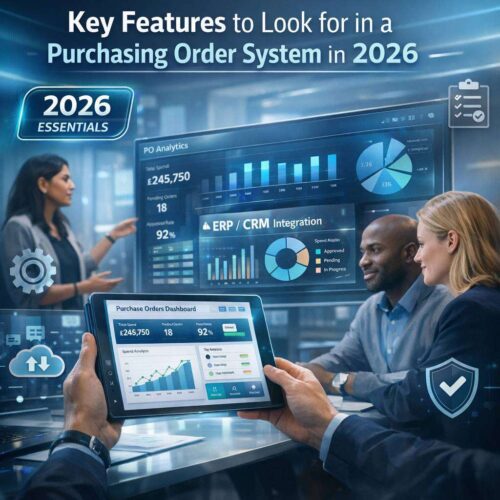
A robust purchasing order system streamlines procurement, improves accuracy, and saves time for growing teams. Businesses seeking efficiency should explore scalable solutions that integrate seamlessly with existing ERP workflows. For more details, visit cloudb2b.co.uk.
In an era where procurement processes are increasingly digitised, selecting the right purchase order system is pivotal for cost control, supplier collaboration, and operational efficiency. As organisations expand, the complexity of purchase orders (POs) grows too. A robust po software solution should streamline workflows, provide visibility, and scale with your business. The following features are essential to evaluate when considering a cloud purchase order system or any software purchase order solution.
Accessibility and cloud capability
A cloud purchase order system offers significant advantages over on‑premises alternatives. It enables real‑time access across departments and locations, supports mobile approval workflows, and reduces the burden of IT maintenance. When evaluating a cloud purchase order system, look for:
- Reliable uptime and strong disaster recovery
- Cross‑platform accessibility (desktop, tablet, mobile)
- Intuitive interfaces with responsive design
- Role‑based access controls to protect sensitive information
Accessibility is not merely convenience; it enables faster decision‑making, tighter control over spend, and improved supplier interactions. A cloud purchase order system should also provide straightforward integration with your existing ERP, accounting, and procurement tools.
Robust approval workflows
Purchase order control is strengthened when the system enforces clear, auditable approval processes. Seek features such as:
- Multi‑level approval routing based on spend thresholds, department, or project
- Delegation options for temporary or permanent approvers
- Configurable escalation rules to prevent delays
- Digital signatures or secure authorisation trails for compliance
Effective approval workflows minimise maverick purchasing while ensuring that authorised personnel review and approve essential spend. A strong po system supports both standard and non‑standard PO scenarios, including blanket orders and contract‑based purchase orders.
Comprehensive supplier management
A modern purchase order system should function as more than a PO creator; it should be a repository of supplier information and performance data. Key capabilities include:
- Centralised supplier catalogue with contact details, payment terms, lead times, and certifications
- Supplier onboarding workflows and document collection
- Performance analytics such as on‑time delivery, quality issues, and price variance
- Bid comparison and negotiated term tracking to support strategic sourcing
Effective supplier management helps you negotiate better terms and reduces the risk of supply disruption. It also feeds into automated replenishment and inventory planning when integrated with your stock management processes.
Purchase order data integrity and control
Accurate data underpins intelligent procurement. Look for:
- Validation rules for PO lines (codes, descriptions, unit of measure)
- Duplicate PO detection and prevention
- Real‑time data validation against agreed contracts and price lists
- Audit trails showing every change to a PO with user stamps and timestamps
A strong purchase order system should prevent common errors that lead to budget overruns or supplier disputes. It should also support versioning for PO amendments and the ability to attach supporting documents (invoices, contracts, delivery notes).
Seamless integration and interoperability
No PO system operates in a vacuum. It should integrate smoothly with your:
- Accounts payable and ERP for seamless financial posting
- Inventory and warehouse management for demand forecasting and stock control
- e‑invoicing and gateway providers to expedite supplier payments
- Budgeting and forecasting tools to align procurement with financial planning
Interoperability reduces manual data entry, minimises reconciliation efforts, and provides a single source of truth for procurement data.
A purchasing order system can streamline procurement, reduce errors, and accelerate approvals for faster project delivery. By standardizing PO creation, tracking, and vendor communication, teams gain visibility and control across the supply chain. Integrated with invoicing and payment workflows, it minimizes late payments and discrepancies. For more details, https://www.quadient.com/en/ap-automation/purchase-orders offers scalable solutions. Choosing the right platform enhances compliance, improves spend analytics, and supports strategic sourcing efforts throughout the organization.
Transparency and real‑time visibility
Stakeholders across procurement, finance, and operations benefit from live visibility into purchase order status. Features to prioritise include:
- Real‑time PO status dashboards with drill‑down capabilities
- Automated notifications for key events (approval, order release, changes, or delays)
- Tracking of commitments against budgets and forecasted spend
- Visualisation of supplier performance and delivery risks
A good po software solution enables proactive management, allowing teams to mitigate bottlenecks before they impact production or service delivery.
Controls and compliance
Regulatory and internal policies demand strict controls. Ensure your purchase order system supports:
- Segregation of duties and approval matrices aligned with governance requirements
- Compliance checks for contract terms, price variances, and volume discounts
- Enforced use of preferred suppliers and negotiated terms
- Comprehensive audit trails suitable for internal audits and external reporting
In regulated sectors, the ability to demonstrate control over every PO step is a decisive advantage.
Spend analytics and budgeting
Advanced analytics turn procurement data into actionable intelligence. Look for:
- Spend analytics by supplier, category, department, and project
- Price‑variance tracking and procurement savings measurement
- Demand forecasting and automatic PO generation against forecast
- What‑if scenarios to assess the financial impact of supplier changes or term adjustments
A capable po system not only records spend but informs smarter negotiation and planning decisions, contributing to overall financial performance.
User experience and change management
Adoption is critical to realising the benefits of any purchase order system. Features to support adoption include:
- Intuitive user interfaces and guided workflows
- Quick‑start templates for common PO scenarios
- Embedded help, tutorials, and contextual tips
- Change management resources and training materials for staff
An easy-to‑use purchase ordering software reduces resistance and speeds up workflow adoption, ensuring the system delivers the intended efficiency gains.
Security and data privacy
Security should be a non‑negotiable consideration for any po software. Priorities include:
- Data encryption at rest and in transit
- Regular security updates and third‑party penetration testing
- Strong authentication options (e.g., MFA)
- Clear data ownership, retention, and deletion policies especially for cloud purchase order systems
Security considerations become even more important when dealing with sensitive supplier terms and financial data.
Deployment options and vendor support
While cloud purchase order systems are increasingly dominant, evaluate vendor support as part of the total cost of ownership. Consider:
- Service levels, uptime commitments, and incident response times
- onboarding and migration assistance
- Regular product updates and roadmap transparency
- Availability of customer success resources, training, and community forums
A reliable vendor will collaborate with you to tailor the po system to your business processes, rather than forcing a one‑size‑fits‑all approach.
In summary, the ideal purchase order system in 2026 blends cloud accessibility with disciplined control, strong supplier management, robust data integrity, and intuitive user experiences. Whether you are evaluating purchase order software, a cloud purchase order system, or a dedicated po system, prioritise end‑to‑end functionality that supports governance, collaboration, and smart spending. By focusing on these features, organisations can achieve greater procurement efficiency, improved supplier performance, and better financial outcomes.