
Conveyer rollers are essential components in modern material handling, ensuring smooth, reliable transport of goods across industries. From lightweight applications to heavy-duty production lines, these rollers optimize efficiency, reduce downtime, and improve throughput. Maintenance, correct sizing, and proper alignment are key for longevity. For durable options and expert specifications, explore the following resource: conveyer rollers to find tailored solutions that meet your operational needs.
Conveying systems are the unsung heroes of modern manufacturing and logistics. When your rollers perform reliably, your processes stay smooth, efficient, and on schedule. This guide is written for engineers, maintenance teams, and operations managers who want to make informed choices about conveyer rollers without getting bogged down in jargon. We’ll cover materials, sizes, and expected lifespans, with practical tips for selecting the right components for your setup.
A well-chosen roller can reduce downtime, minimise product damage, and extend the life of your conveyor belt. Whether you’re upgrading an existing line or specifying parts for a new installation, understanding the options helps you balance cost, performance, and durability. Let’s break down the essentials so you can shop with confidence.
Conveyer rollers play a crucial role in efficient material handling, reducing friction and guiding loads smoothly through various production stages. Selecting the right rollers affects uptime, maintenance costs, and overall conveyor performance. From roller materials to bearing types, understanding components helps optimize speed and reliability. For more in-depth guidance on parts and components, visit the following resource in the second half: https://conveyorrollers.com/a-guide-to-the-parts-and-components-of-a-conveyor/
Conveyor rollers ensure smooth, efficient material handling across many industries, reducing downtime and boosting throughput. For reliable components, explore high-quality options like conveyer rollers and compatible accessories. https://maedlernorthamerica.com/partshop/conveyor-roller-s1-steel-zinc-plated-o60mm-rl600mm-el622mm-al652mm-external-thread-pn-65682606/ Choose durable, precision-made parts to keep lines productive and safe.
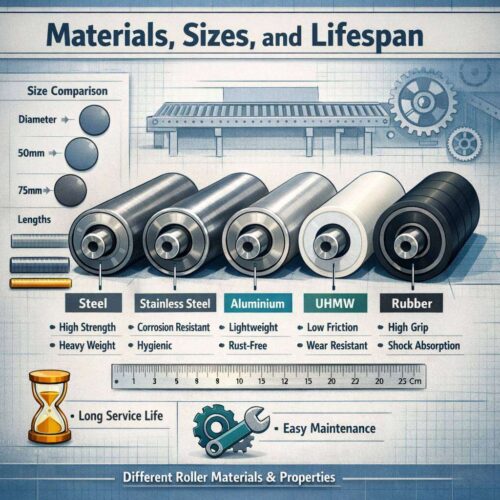
Materials and their implications
Conveyor belt rollers come in several core materials, each offering different strengths for various environments and loads. The most common options you’ll encounter include:
- Steel rollers: Known for their strength and rigidity, steel rollers are ideal for heavy loads and high-usage environments. They resist bending and provide long service lives when properly maintained. If your line runs in a clean, dry environment, steel rollers are a reliable choice. In wetter or more corrosive settings, consider corrosion-resistant finishes or alternative materials.
- Stainless steel rollers: A step up from standard steel in terms of corrosion resistance, stainless steel is a popular choice in food processing, pharmaceutical, and wash-down environments. They offer excellent durability and hygiene advantages but may come at a higher cost and weight.
- Plastic rollers: Lightweight and corrosion-resistant, plastic rollers are often used for lighter-duty lines or where chemical exposure is a concern. High-quality polymer rollers can offer good wear resistance and quiet operation. They’re also easier to fabricate into custom geometries.
- Grooved rollers: These include a groove pattern that helps track belts, especially in positive-drive or timing-belt configurations. Grooved rollers can help prevent belt slip and improve alignment, particularly on driven systems.
- Driven rollers: A category that refers to rollers with a built-in drive mechanism (or where the roller itself is actively powered). These are essential for sections of a line where belt tension or motion needs direct control, such as in accumulation or load-securing zones.
When selecting materials, consider factors such as load capacity, environmental conditions (temperature, moisture, and chemical exposure), hygiene requirements, noise levels, and maintenance capabilities. For harsh production floors, a robust steel or stainless steel option with appropriate coatings may outperform plastic in the long run. For cost-conscious lines with lighter products, high-grade plastic rollers can deliver satisfactory performance with lower total cost of ownership.
Conveyer rollers are essential components in efficient material handling, reducing friction and increasing throughput on diverse production lines. Selecting the right rollers improves stability, load capacity, and longevity, while minimizing downtime. For a wide range of robust options that meet exacting standards, researchers and engineers often consult trusted suppliers. Explore detailed listings and specifications to find durable solutions. https://www.ashlandconveyor.com/collections/rollers?page=89
Size, geometry, and compatibility
Roller size is more than a simple matter of diameter. You’ll need to match:
- Roller diameter: Larger diameters provide greater load distribution and better resistance to surface damage, while smaller diameters save space and may offer smoother operation for very light or delicate items. Common diameters range from around 20 mm to 80 mm or more, depending on the conveyor’s width, load, and speed.
- Roller length: Length should align with the conveyor width and the supported load area. Longer rollers distribute weight more evenly and can reduce deflection under heavy loads.
- Bore size and mounting: The hub bore must fit your shaft or pillow block arrangement. Tolerances are crucial for smooth rotation and reduced wobble, so ensure compatibility with your existing frame and drive system.
- Grooved versus smooth: If you’re using a timing belt, chain, or drive belt, grooved rollers help maintain belt track and reduce slip. For friction-drive or flat-belt systems, smooth rollers are typically appropriate.
- Shaft size and support: The mounting hardware—whether simple pillow blocks, end-supported shafts, or full-drive arrangements—must handle the line’s speed and torque. In high-torque situations or longer spans, additional support bearings or roll diameter adjustments may be needed.
Compatibility matters, especially if you’re replacing rollers on an existing line. Take precise measurements of the existing spline or bore, the belt type (e.g., go-to materials such as polyurethane, PVC, or fabric belts), and the drive arrangement. For those in the UK, you’ll find plenty of options under “rollers uk” and related terms, but always verify that new rollers align with your conveyor’s belt system and frame tolerances.
Lifespan, maintenance, and refurbishment
A roller’s lifespan depends on material, usage, and the operational environment. Here are practical guidelines to help you maximise uptime:
- Load and speed: Higher loads and faster speeds accelerate wear. Select rollers with a safety factor aligned to your peak operating conditions. For critical lines, consider dedicated driven rollers in sections where slip or belt wear is most common.
- Environment: Dust, moisture, chemicals, and temperature swings affect longevity. Stainless steel and properly coated steel offer better longevity in harsher environments; plastic options may excel in clean, low-load contexts.
- Maintenance planning: Regular inspection is essential. Look for surface wear, bearing play, misalignment, and signs of corrosion or cracking. Establish a maintenance cadence that fits the line’s duty cycle, with more frequent checks for high-speed or high-load sections.
- Replacement strategy: Not every component needs a full rebuild. Often, replacing worn bearing assemblies or a matched set of rollers in a zone can restore performance without a full-line shutdown. For rollers that drive or tension the belt, ensure the replacement includes properly matched drive or anti-slip features to avoid belt damage.
If your system uses grooved rollers or a specific conveyer belt type, plan for compatibility across the replacement cycle. For example, driven rollers with a precise drive ratio should be matched to the motor and belt to avoid overloading the drive side.
Choosing the right conveyer rollers is a balance of material, size, and maintenance strategy. By considering your load, environment, and drive configuration—and keeping an eye on compatibility with your current system—you’ll select rollers that deliver consistent performance, lower total cost of ownership, and smoother operations for years to come.