
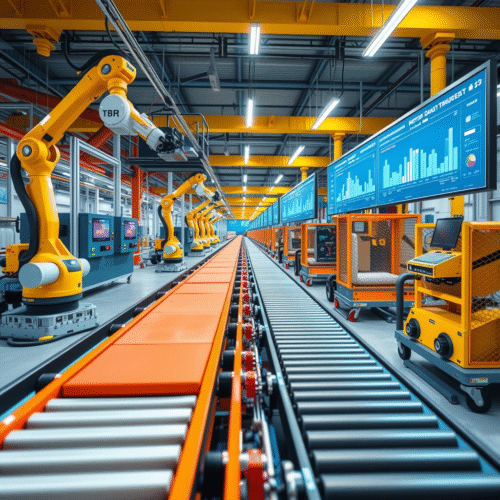
Conveyors are essential tools in modern industries, streamlining the movement of goods in warehouses and production lines. They enhance efficiency, reduce labor costs, and minimize errors. For a deeper understanding of how these systems operate, visit https://6river.com/what-is-a-conveyor-system/. Embracing conveyor technology can significantly boost your operational productivity.
In the rapidly evolving landscape of industrial automation, conveyor systems are experiencing a technological renaissance. From manufacturing lines to distribution centres, conveyors are the backbone of material handling, streamlining processes and enhancing operational efficiency. As we forge further into the 21st century, the integration of cutting-edge technologies in conveyor systems is transforming how industries operate, manage their workflows, and ultimately achieve their production goals.
The advent of automation, artificial intelligence, and IoT (Internet of Things) is driving innovation within the conveyor industry. These technologies are not only optimising existing systems but are also introducing new functionalities that facilitate seamless communication, better scalability, and impressive energy efficiency. This blog post will delve into the current trends shaping the future of conveyors, focusing on automation and robotics, data analytics, and sustainability features that are paving the way for a smarter, more efficient material handling paradigm.
Automation and Robotics: A Game Changer for Conveyors
One of the most significant developments in conveyor technology is the increasing incorporation of automation and robotics. Automated conveyor systems are designed to minimise human intervention, thereby reducing errors and maximising productivity. Vision systems, equipped with cameras and sensors, enable conveyors to identify and sort materials based on predefined parameters. This level of precision not only streamlines operations but also enhances safety in facilities where hazardous materials are present.
Moreover, robots can now be integrated with conveyor systems to perform complex picking and placing tasks. Robots equipped with machine learning capabilities can adapt to various products, dynamically adjusting to different sizes and shapes without the need for manual reprogramming. This flexibility recognises the shift toward more streamlined and varied production lines to accommodate consumer demand. From palletising boxes to assembling components, the collaboration between conveyors and robotic systems is proving to be revolutionary, making operations faster and more efficient.
Additionally, the rise of smart manufacturing—which combines IoT and industrial automation—further enhances the capabilities of conveyor systems. Smart conveyors are now able to collect and transmit data regarding their operation, facilitating real-time monitoring and predictive maintenance. This innovation enables industries to reduce downtime and optimise their supply chains with unprecedented accuracy.
Data Analytics: The Power of Smart Conveyors
As the world becomes increasingly data-driven, the relevance of data analytics within conveyor systems cannot be overstated. Industries are leveraging data collected from conveyor operations to make informed decisions that drive efficiency and reduce costs. By integrating sensors and IoT devices, smart conveyors can collect vast amounts of data on key performance indicators (KPIs) such as speed, load weight, and energy consumption.
Data analytics allows companies to analyse historical performance, identify trends, and uncover areas for improvement. For instance, through continuous monitoring, industry leaders can assess conveyor efficiency and pinpoint bottlenecks in real-time. This insight is instrumental in making necessary adjustments to maximise throughput and reduce waste. By employing predictive analytics, businesses can foresee equipment failures before they occur, enabling proactive maintenance strategies that further enhance operational efficiency.
In the era of Industry 4.0, the importance of utilising data does not only rest on improving internal operations but also extends to supply chain optimisation. With the capability to track goods in real-time, businesses can fine-tune their inventory management strategies and enhance their responsiveness to market demands. As consumer behaviour shifts and e-commerce continues to grow, the ability to leverage data effectively through sophisticated conveyor systems will be a key differentiator for 21st-century companies.
Conveyors play a crucial role in enhancing efficiency in various industries. Whether for transporting goods or facilitating production lines, conveyors streamline operations and reduce manual labor. Their versatility makes them essential for businesses looking to improve workflow and productivity across different sectors.
Conveyors are essential in streamlining food preparation processes. For efficient toasting, consider the https://www.hatcocorp.com/en/equipment/cooking-equipment/commercial-toasters/intelligent-toast-qwik-conveyor-toaster-itq-1750-2c, designed to enhance operational speed and consistency in commercial kitchens.
Sustainability Features: Eco-Friendly Innovations in Conveyor Systems
In response to growing environmental concerns, the conveyor industry is also embracing sustainability features that significantly reduce its carbon footprint. Modern conveyor systems are now designed with energy efficiency in mind, utilising lightweight materials and advanced drive technologies to lower energy consumption during operation. Manufacturers are increasingly opting for energy-efficient motors and drives that not only consume less power but also enhance the overall performance of the conveyor.
Moreover, recycling and eco-friendly materials are becoming standard in the production of conveyor components. By sourcing recyclable materials and minimising waste during manufacture, companies are aligning their processes with sustainable practices. The implementation of regenerative braking systems in conveyor designs also exemplifies the industry’s commitment to sustainability, allowing excess energy generated during operation to be captured and reused.
Advanced technology is also paving the way for responsible disposal practices. Several companies now offer solutions for the disassembly and recycling of conveyor materials at the end of their lifecycle. This approach promotes a circular economy, whereby manufacturers can reclaim valuable resources, thus reducing dependence on virgin raw materials.
As industries look towards a sustainable future, the integration of environmentally friendly features in conveyor systems positions businesses not only as leaders in efficiency but also as responsible stewards of the planet. The push towards sustainability in the conveyor sector highlights how innovation can intersect with corporate responsibility, driving progress in tandem.